Not every engineering project requires large-scale production. Many industrial businesses need a few custom components, replacement parts, prototypes or small production batches before moving to larger quantities.
For these requirements, CNC job work, prototype manufacturing and small-batch production provide a practical manufacturing solution.
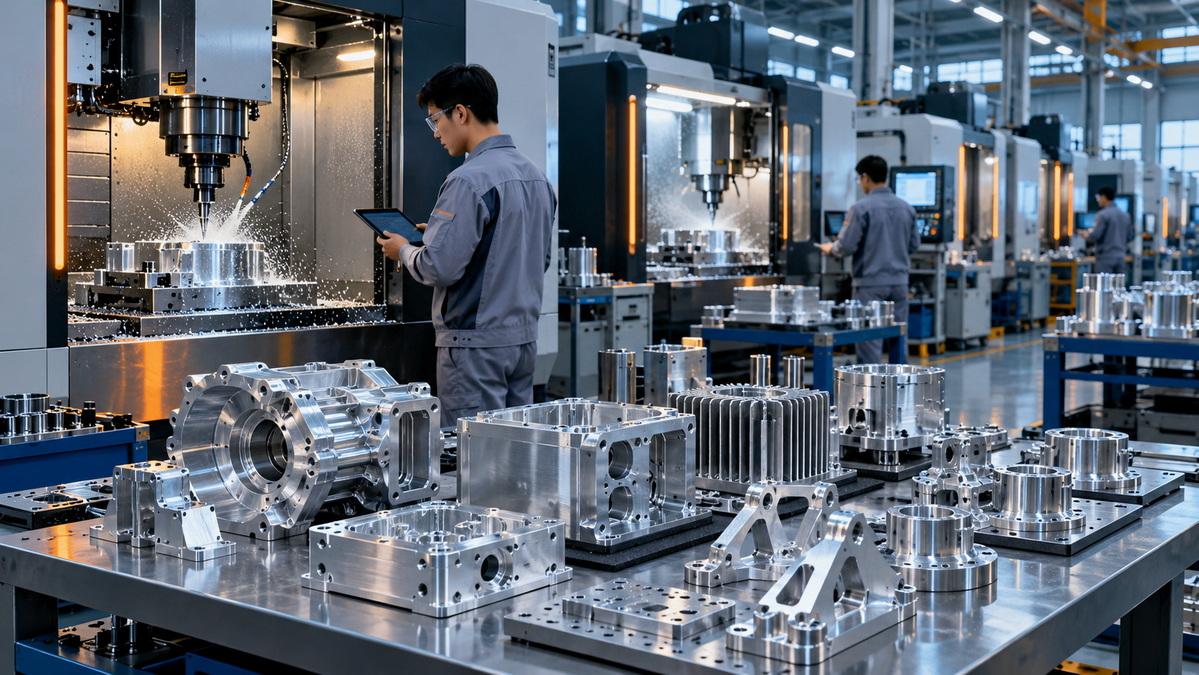
Ayas Sudhanva Engineering supports custom engineering requirements through precision component manufacturing, job work, prototype and small-batch manufacturing, jigs and fixtures, surface grinding, testing and other engineering services.
What Is CNC Job Work?
CNC job work is a manufacturing arrangement where a company outsources the machining of components to a specialized engineering manufacturer.
The customer generally provides requirements such as:
- Engineering drawings
- CAD files
- Samples
- Component specifications
- Material requirements
- Quantity requirements
- Dimensional and quality expectations
The machining partner then plans and manufactures the component according to the agreed requirements.
Why Do Companies Outsource Machining Job Work?
Maintaining an in-house machine shop can require significant investment in:
- CNC machines
- Conventional machines
- Tooling
- Inspection equipment
- Skilled operators
- Maintenance
- Production planning
For occasional, custom or specialized component requirements, outsourcing can provide greater flexibility.
A capable engineering partner can help companies manufacture components without having to manage every stage of machining internally.
Prototype Manufacturing
Before starting full-scale production, companies often need a prototype.
A prototype helps engineers evaluate:
- Component dimensions
- Design functionality
- Assembly
- Fit
- Manufacturing feasibility
- Performance
- Potential design improvements
Prototype manufacturing therefore plays an important role between design and production.
The process can be broadly represented as:
Design → Prototype → Inspection → Testing → Design Improvement → Production
This approach can help identify manufacturing or design issues before committing to larger production quantities.
Small-Batch Manufacturing
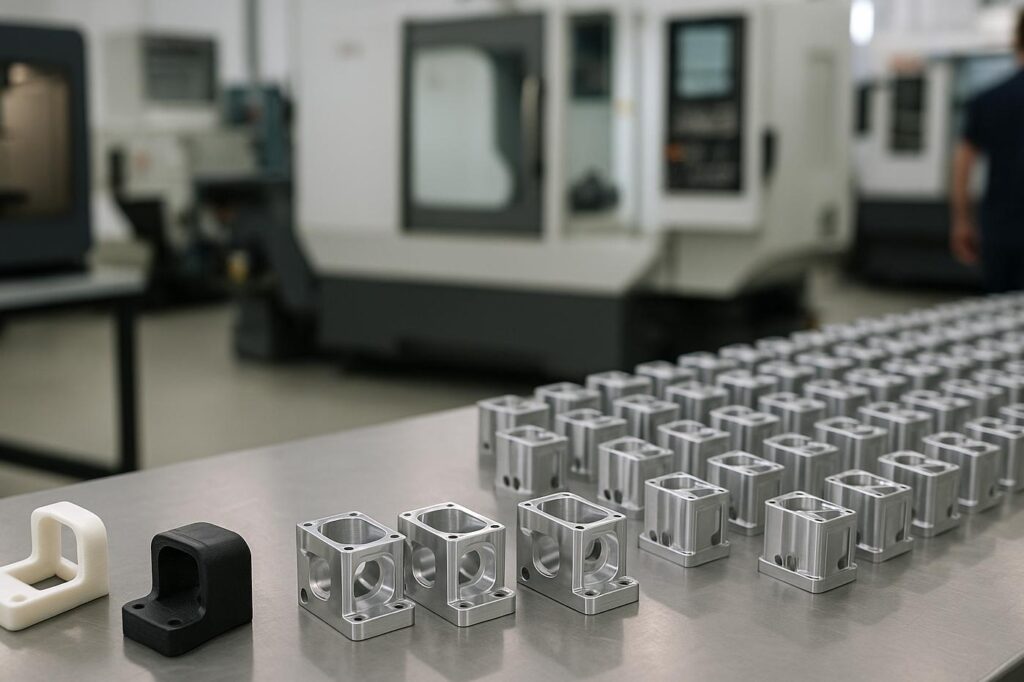
Small-batch manufacturing is useful when a customer needs a limited quantity of components.
Typical applications include:
- New product development
- Replacement parts
- Machine spares
- Special-purpose components
- Engineering trials
- Pilot production
- Custom industrial equipment
- Maintenance requirements
Instead of producing thousands of components, manufacturers can produce the required quantity based on the project’s immediate needs.
Job Work for Industrial Components
Precision job work can be applied to many types of engineering components.
Ayas Sudhanva Engineering works with products and applications including:
- Valve components
- Pump parts
- Hydraulic components
- Automobile components
- Railway components
- Motor spares
- Textile spares
- Machine spares
- Jigs and fixtures
- General engineering components
These applications support industries including valve, pump, automobile, textile, energy, EV, dairy and general engineering sectors.
Jigs and Fixtures for Better Manufacturing
For repeatable manufacturing, properly designed jigs and fixtures can play an important role.
A fixture helps position and hold a workpiece during machining, while a jig can assist with guiding a machining operation.
Well-designed tooling can help improve:
- Component positioning
- Repeatability
- Machining consistency
- Production efficiency
- Operator convenience
This makes jigs, fixtures and gauges valuable for both prototype development and production environments.
From Prototype to Production
A major advantage of working with an experienced manufacturing partner is the ability to support the component through different stages of development.
For example:
Stage 1 — Requirement
The customer provides a drawing, sample or technical requirement.
Stage 2 — Engineering Review
The manufacturing team evaluates the component and determines a suitable production approach.
Stage 3 — Prototype
A sample or limited quantity is manufactured.
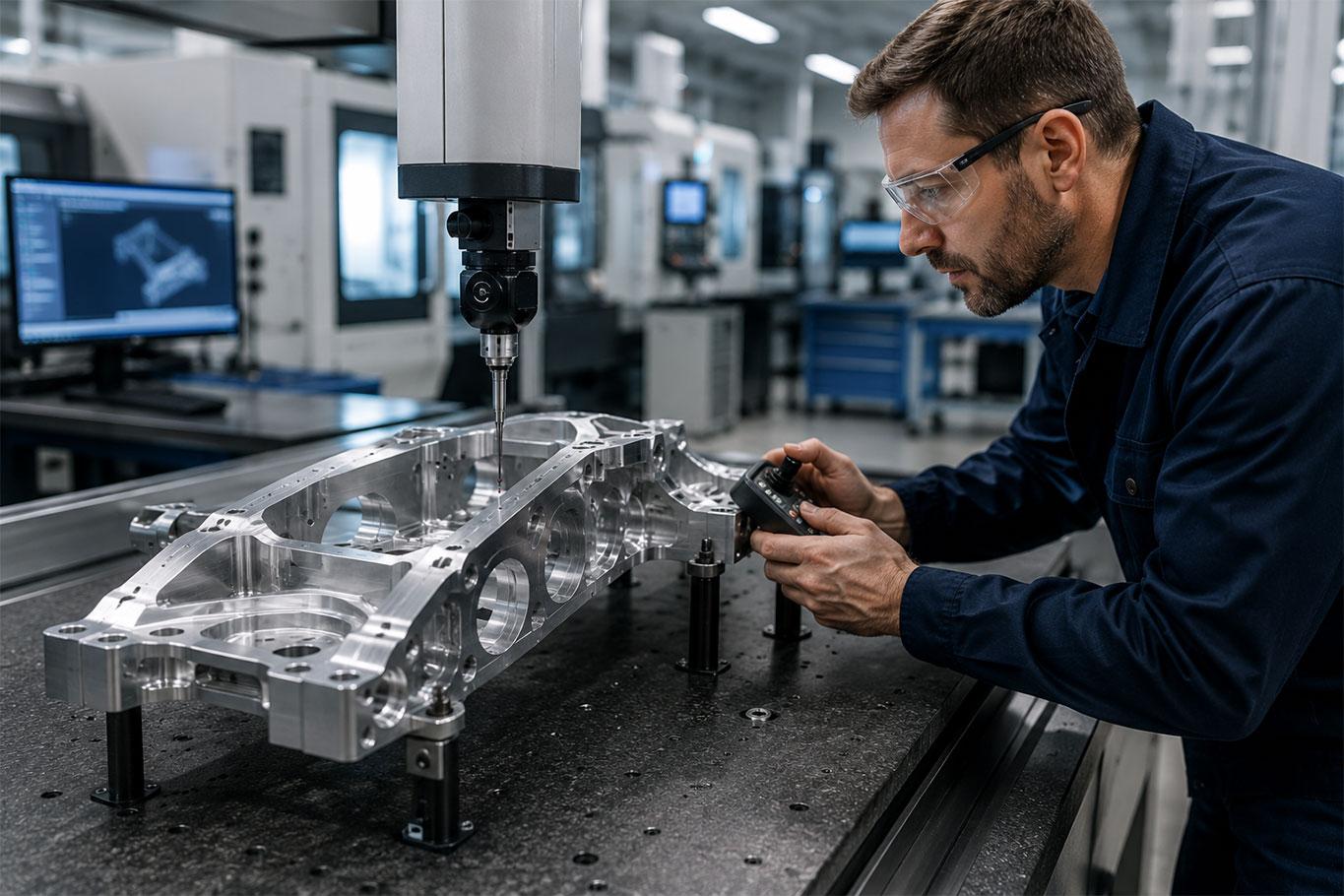
Stage 4 — Inspection
The prototype is inspected against the required dimensions and specifications.
Stage 5 — Improvements
Any required changes to the design or manufacturing process can be identified.
Stage 6 — Small-Batch / Production
Once the component is approved, production can proceed according to the required quantity.
Why Choose an Integrated Engineering Manufacturer?
Working with a manufacturer that offers multiple supporting capabilities can simplify the overall production process.
Instead of coordinating separate suppliers for machining, grinding, inspection, finishing and testing, customers can work with a manufacturing partner that provides multiple services.
Ayas Sudhanva Engineering offers a combination of precision component manufacturing, job work, prototype and small-batch manufacturing, CMM inspection, jigs and fixtures, surface grinding, painting, testing and general engineering.
Applications Across Industrial Sectors
Custom job work and small-batch manufacturing are particularly useful for industries where components are application-specific.
These include:
- Oil & Gas – custom industrial and valve-related components.
- Hydro Power – precision components for power-generation applications.
- Railways – railway and heavy engineering components.
- Automotive – custom-machined automobile components.
- Textile Machinery – textile machine spares and components.
- Energy & Heavy Engineering – precision components for demanding industrial equipment.
- EV & Emerging Mobility – precision components for evolving mobility applications.
- Dairy Machinery – components for dairy processing equipment.
Ayas Sudhanva Engineering currently identifies these sectors among the industries it serves.
Conclusion
CNC job work, prototype manufacturing and small-batch production give industrial businesses greater flexibility when developing or sourcing custom components.
Whether you need a prototype, a replacement machine part, a small production batch, a precision-machined component or custom engineering job work, choosing the right manufacturing partner can help simplify the process from requirement to finished component.